
 My Account
News
LandCruiser 70 Series CV Joints | 30% Longer Life Underground
CV Joints That Last Longer
Across underground mine sites, TAKEO CV joints have delivered up to 30% longer operating life compared to genuine units. That data comes directly from site trials conducted with our customers. For maintenance teams that means less downtime and less money spent on expensive workshop labour.
Our objective is always aligned with maintenance teams on-site – increase operating hours and reducing downtime.
And what works in most conditions, probably doesn’t work in mining conditions.
That’s why we’re committed to trialing all of our parts in real mine-site operations.
Watch the video for more information on our range of CV joints.
What Makes Underground Mining Conditions Different?
Underground mining exposes driveline components to constant load, heat, contamination, and repeated articulation. The winding tunnels and mandatory slow speeds mean the CV joints are under constant strain. On top of the operational challenges, underground operations come with environmental contaminants like saltwater, dust, dirt, slurry and other nasty stuff.
These challenges are tough on their own, but when they’re all stacked up together – it’s absolutely brutal on the driveline components. Due to how unique the conditions and operational requirements are in underground mining, the requirements and engineering considerations can be very different to that of regular automotive parts.
That’s exactly why our parts last longer than genuine components.
Sure, genuine components are the gold standard. But they’re the gold standard for regular driving conditions – conditions that the majority of the general public face every day. Genuine parts aren’t designed for mining, they’re designed for city driving and the occasional off-road bush bash. TAKEO parts are designed for mining conditons and mining conditions only, that’s the difference.
TAKEO CV joints have been developed using:
- Feedback from site fitters and maintenance teams
- Observed wear patterns across underground fleets
- Trial data from real operating environments
Every design decision is tied back to how these vehicles are actually used.
Key Design Features That Drive Longer Life
Higher Quality Bearings and Race
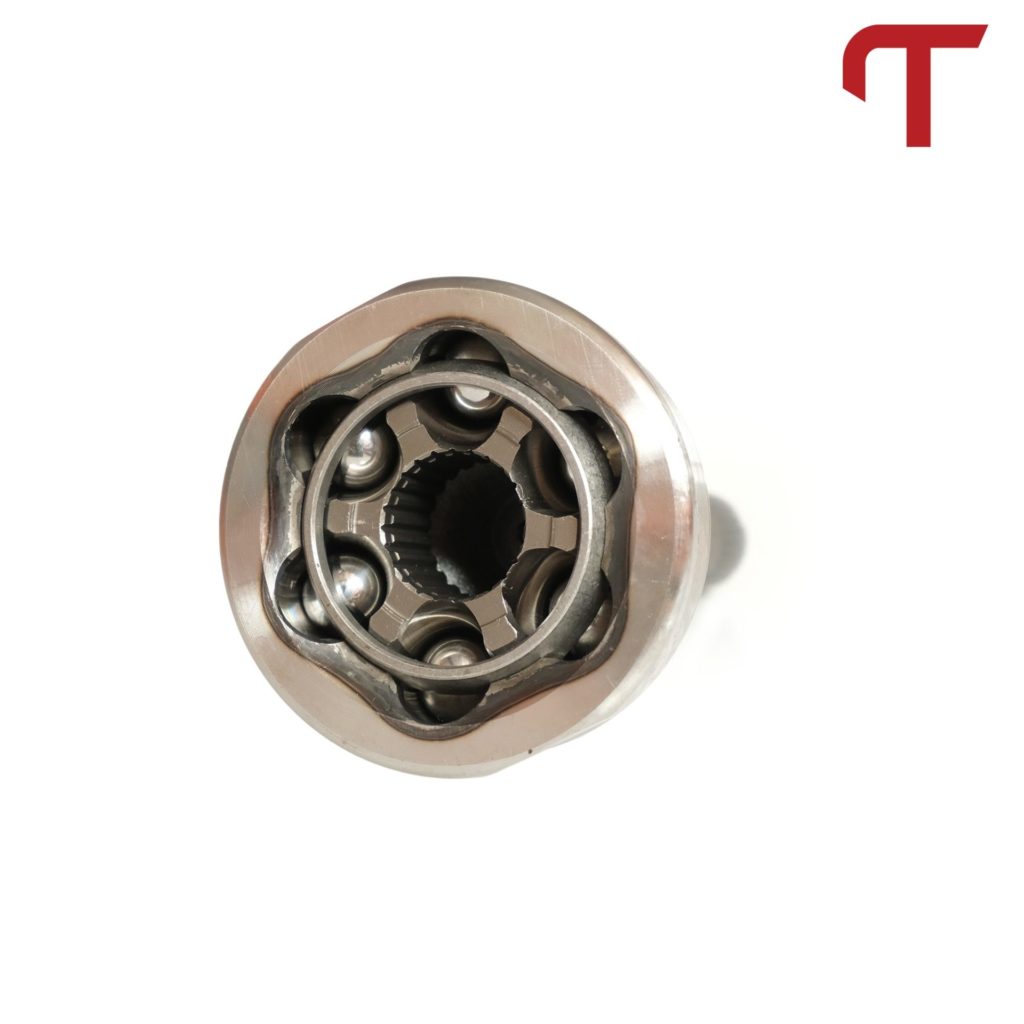
The internal bearings and the race that they sit within is where most wear occurs. Once this race or the bearings are damaged, then it’s not long until the entire component is compromised.
The TAKEO CV joints have been re-engineered in this critical area to exceed the genuine spec. The hardness treating of the steel race has been applied deeper into the steel, meaning a thicker layer of hardened steel protecting from imperfections on the surface.
Improved material quality and hardness helps to reduce:
- Surface wear under load
- Pitting over time
- Deformation through repeated cycles
Hardened Steel Casing
The outer housing carries the load and absorbs impact, protecting the internal mechanisms from damage. This one is a no brainer – if you increase the strength of the outer casing, then you protect the internals.
A hardened steel construction improves:
- Resistance to fatigue
- Structural stability under load
- Durability in harsh operating environments
Heat-Treated Shaft
The shaft is exposed to constant torque and shock loading, which generates extreme temperatures every single time the vehicle is in movement. Tempering the steel shaft in the manufacturing stage, means a higher resistance to these extreme temperatures which are inevitable.
Heat treatment increases:
- Strength under torsional load
- Resistance to fatigue
- Reliability over extended use
OE-Spec Weight Matching
Weight consistency plays a large role in overall driveline performance, ensuring consistency of driveline functionality. While there are weight tolerances which components can fall between, matching the exact weight is a way to reduce the amount of change between the genuine unit and the new TAKEO CV joint, allowing for accurate performance data and trial metrics.
Matching OE specifications ensures:
- Proper balance
- No added stress on surrounding components
- Consistent operation across the system
Greaseable CV Joints for Ongoing Maintenance
Greaseable CV joints give the maintenance team more control and visibility of the components condition. The grease points allow fitters to pump fresh grease into the component, reducing the risk of contaminated grease inside the cv joint which can lead to failure.
This is becoming more and more popular amongst our mining clients, who regularly service the driveline components of their light vehicles. Greaseable CV joints are not common in regular automotive contexts, and not a feature of any genuine components – which is why many maintenance teams are switching to TAKEO CV joints.
Maintenance teams can:
- Re-lubricate during service intervals
- Help manage contamination
- Maintain lubrication quality over time
This supports longer service life, particularly in underground environments.
Pre-Assembled CV Joints for Workshop Efficiency
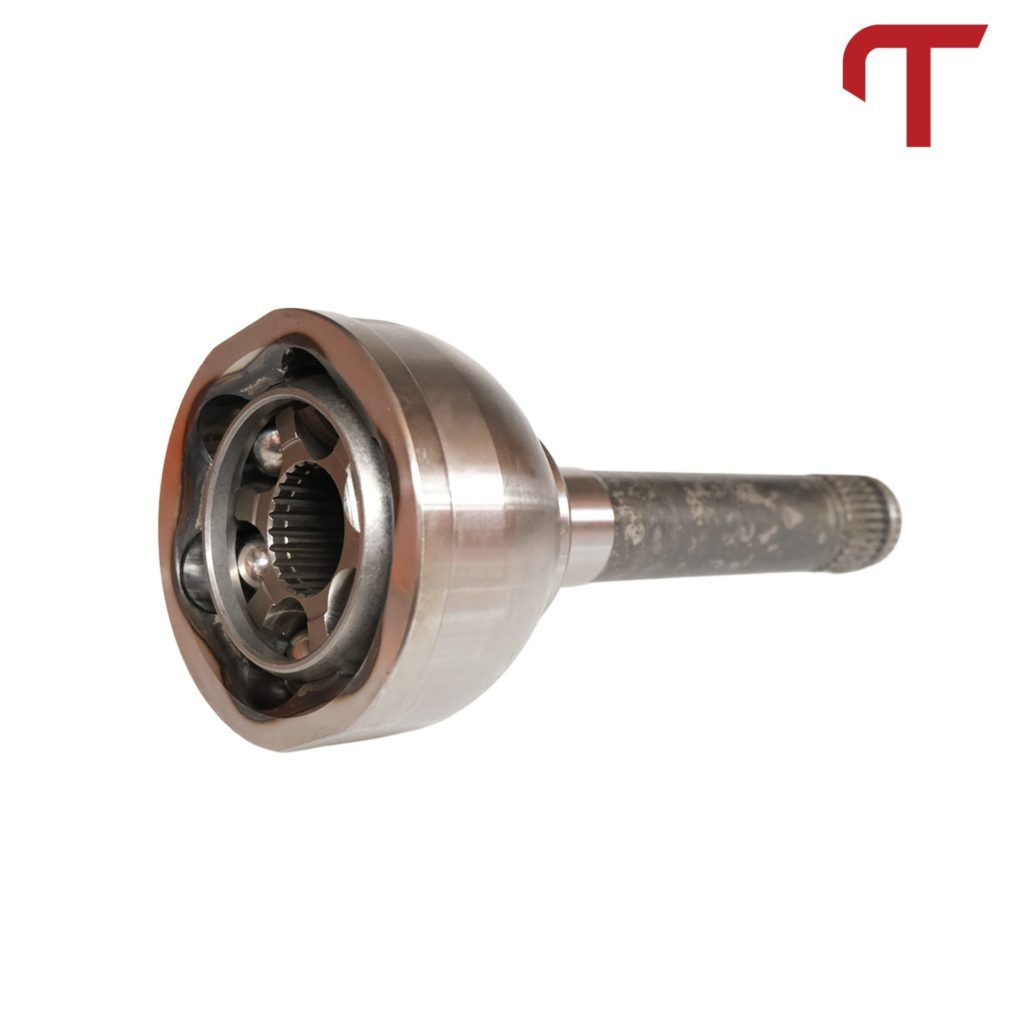
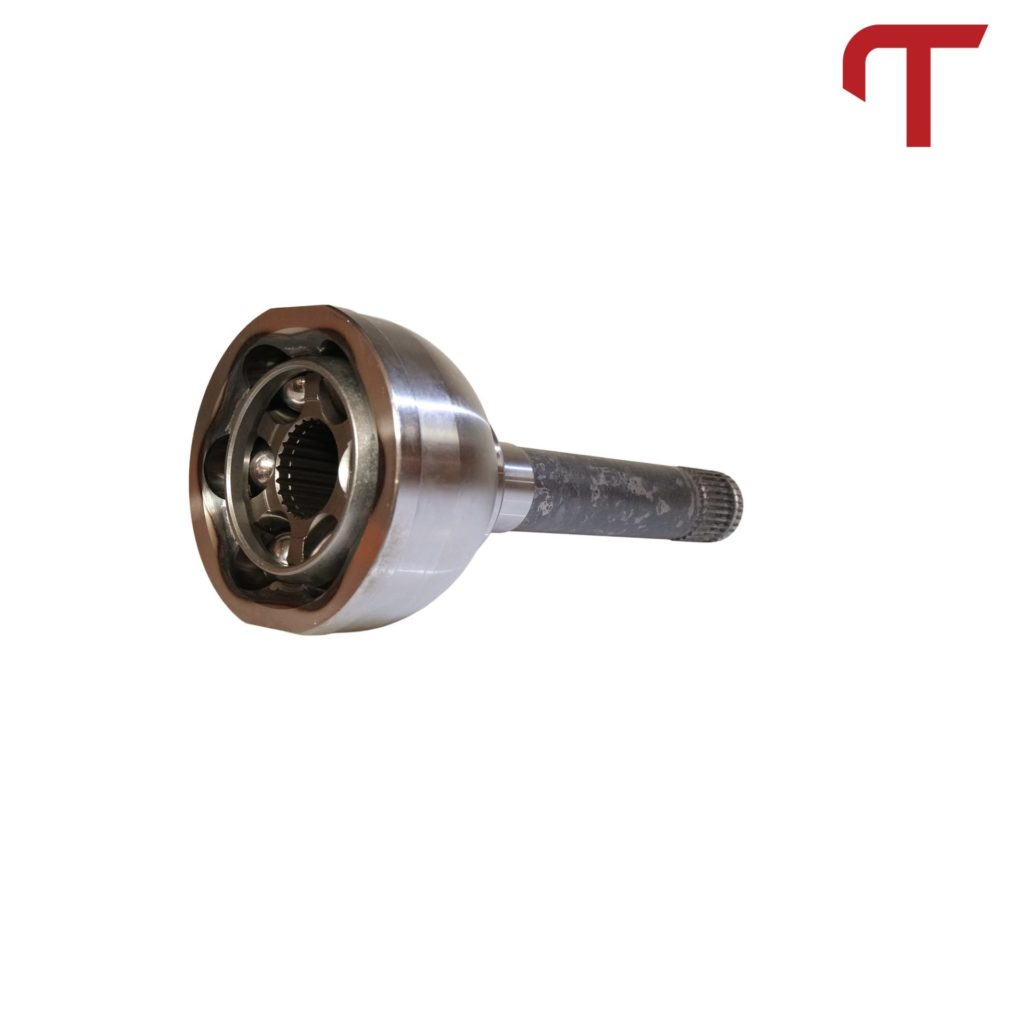
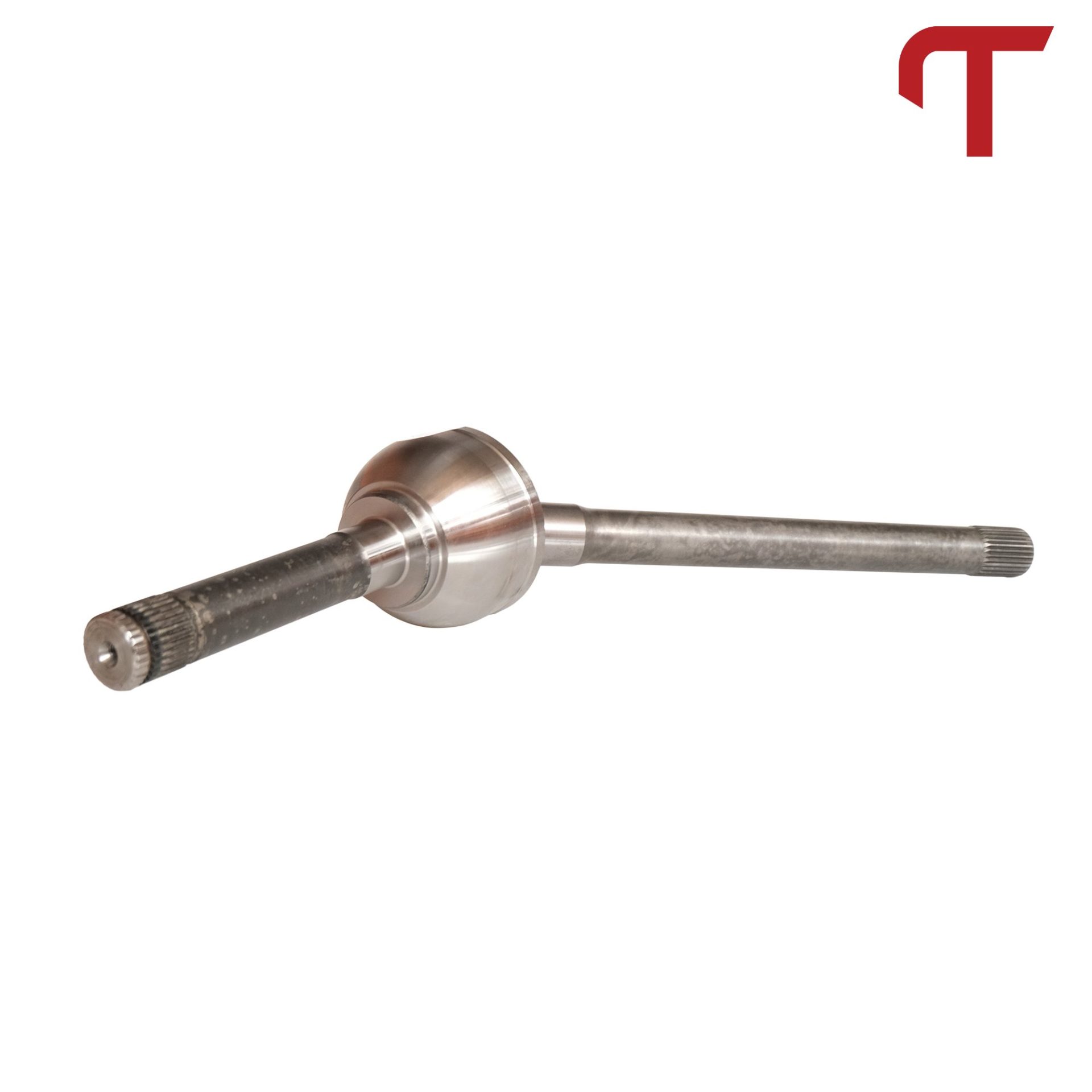
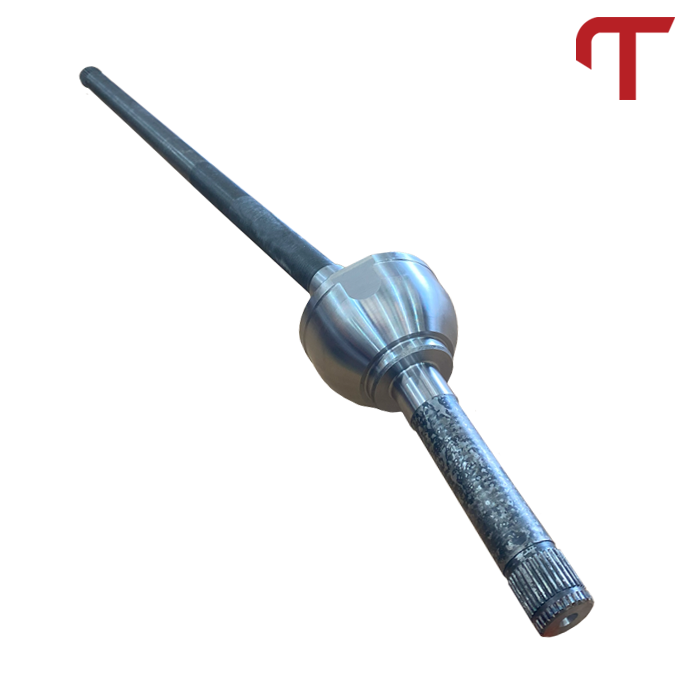
TAKEO CV joints are offered as a fully assembled part, with the axle shaft and CV joint machined and lubricated with grease. This means that the part arrives to site and is immediately ready to fit into place. There is no extra work required to assemble the part before installation. This comes with a slightly higher cost due to the labour work involved, but many maintenance teams prefer this method due to the time saving benefits.
Maintenance teams:
- Avoid the machining and assembly process
- Save time in the workshop
- Reduce admin work of ordering component parts
This supports quicker maintenance, and overall workshop efficiency.
Full Range of TAKEO CV Joints for LandCruisers
The TAKEO range includes:
- Standard OE CV joints
- Greasable CV joint options
- Pre-assembled CV axle shafts and joints
See below the codes for our main range of CV Joints designed to last longer in mining conditions.
| OE-43405-60100 | CV JOINT – HZJ7# /HZJ79L (W/O FWH TYPE – CONSTANT 4WD) |
| OE-43405-60100G | CV JOINT FR – HZJ7# GREASEABLE – FULLTIME 4WD (WO FWH) |
| OE-43405-60120 | CV JOINT – HZJ79/VDJ7#/GDJL7# (W/ FWH) |
| OE-43405-60120G | CV JOINT – GREASEABLE HZJ79/VDJ7#/GDJL7# |
| OE-43405-60100LH-ASSM+ | CV AXLE SHAFT PREASSEMBLED – LHF VDJ7# FULL4WD- GREASEABLE |
| OE-43405-60120LH-HZJ7 | CV AXLE SHAFT PREASSEMBLED – LHF PRE 2007 |
| OE-43405-60120LH-ASSM | CV AXLE SHAFT PREASSEMBLED – LHF VDJ7# /GDJL7# |
| OE-43405-60120LH-ASSM+ | CV AXLE SHAFT PREASSEMBLED – LHF VDJ7# 07> GREASABLE |
| OE-43405-60100RH-ASSM+ | CV AXLE SHAFT PREASSEMBLED – RHF VDJ7# FULL4WD- GREASEABLE |
| OE-43405-60120RH-ASSM | CV AXLE SHAFT PREASSEMBLED – RHF HZJ7# & VDJ7# GDJL7#(SHORT) |
| OE-43405-60120RH-ASSM+ | CV AXLE SHAFT PREASSEMBLED – RHF VDJ7# – GREASEABLE |
What Does OE Mean?
OE is an abbreviation that you will see in many TAKEO product codes. OE stands for ‘Original Equipment’ and is an evolution of an industry term which we have adopted as a marker of quality.
If a product is labelled as ‘OE’ it means that the component is at an equivalent quality level of the original equipment, more commonly known as the OEM component.
While genuine light vehicle components are obviously regarded as high quality, they aren’t designed specifically for mining conditions – where as TAKEO parts are. For this reason, we use the ‘OE’ classification as a way to benchmark our components against the genuine alternative.
Think of it this way, an ‘OE’ TAKEO part is always at least on the same level of quality as the genuine alternative, if not higher. This distinction is always made as the parts relate to a mining context. We don’t judge quality based on city driving, or racing, or road trips – we judge quality based on how long it lasts in mining, or how it helps to reduce downtime in mine-site workshops.
TAKEO codes which end in a ‘+’ indicate that the component is far and above the level of the genuine alternative. There is many reasons why a part might be attributed with this ‘+’. For example, our range of anti-corrosion coated parts are far and above the quality of the genuine alternative, due to their increased resistance against corrosion commonly found in underground conditions. In other contexts, a part may receive a ‘+’ because of the way it is assembled, or the inclusion of a rare part within a kit. In these scenarios the part or kit receives the ‘+’ classification because it is in a league of it’s own – not easily found elsewhere on the market.
GET IN TOUCH
We’re open Monday to
Friday, 7.30am – 5pm.
Phone: 1300 310 310
Fax: +61 (8) 9351 5470
Email: [email protected]
Got a question or need a quote?
Use this form and we’ll get right back to you.